
Is your estrogen out of balance? Your gut plays a bigger role than you might think

(c) Canva
Bar ohne Namen
Entschlossen verweigert sich Savage, der Bar einen Namen zu geben. Stattdessen sind drei klassische Design-Symbole das Logo der Trinkstätte in Dalston: ein gelbes Quadrat, ein rotes Viereck, ein blauer Kreis. Am meisten wurmt den sympathischen Franzosen dabei, dass es kein Gelbes-Dreieck-Emoji gibt. Das erschwert auf komische Weise die Kommunikation. Der Instagram Account lautet: a_bar_with_shapes-for_a_name und anderenorts tauchen die Begriffe ‘Savage Bar’ oder eben ‚Bauhaus Bar‘ auf.
Für den BCB bringt Savage nun sein Barkonzept mit und mixt für uns mit Unterstützung von Russian Standard Vodka an der perfekten Bar dazu.
Did you know that your gut not only regulates digestion, but also influences your oestrogen levels? You may never have thought about it before, but your gut, or more specifically the oestrobolome, plays a crucial role in your hormonal balance. Let's dive in together and find out why that is - and what you can do to support it.
Women experience natural hormonal fluctuations throughout their lives - from puberty and menstruation to pregnancy and the menopause. These phases make stable hormone regulation particularly important. When it comes to hormones, most people think of the ovaries, thyroid or perhaps the adrenal glands. However, your gut and liver also play an important role here. Both work to regulate your oestrogen levels. This means that if you're struggling with hormonal issues such as oestrogen dominance or deficiency, it's worth paying special attention to them.
I can still remember moments during the menopause when I realised how sensitively my gut reacted to small imbalances in my diet and how directly this affected my oestrogen levels. This experience made me realise how important intestinal flora is for our hormonal balance. For me, my clients and I'm sure for you too, this is a valuable insight into how to better regulate oestrogen and sustainably improve your well-being.
Your gut as a player in the hormone balance
A healthy gut can help reduce symptoms such as premenstrual bloating, PMS or hot flushes. Especially during menopause, when oestrogen levels decline, a balanced microbiome can help the body to ease the transition and minimise long-term health risks.
What is the oestrobolome?
Your gut is home to countless bacteria that work closely with your body and have a major impact on your health. Some of them are specifically responsible for processing and regulating your oestrogen. This group of bacteria is called the oestrobolome - they are part of your microbiome.
The oestrobolome plays a central role in women's health. It affects the menstrual cycle, fertility and the risk of hormone-dependent diseases. A healthy gut can regulate oestrogen levels, while an imbalance in the gut flora can lead to serious hormonal imbalances.
Imagine the function of the bacteria in the oestrobolome as bouncers that decide whether a hormone can stay or has to go. They work hand in hand with your liver - an impressive collaboration that maintains your hormonal balance.
How does the oestrobolome affect your oestrogen?
You may have heard that intestinal bacteria can ‘produce’ oestrogen. This is not true. However, they are significantly involved in how your body deals with oestrogens. Excess hormones or hormone-like substances - for example residues from cosmetics or medication - are processed in the liver and then sent to the intestines for excretion.
This is where the oestrobolome comes into play. It produces an enzyme called ß-glucuronidase. This enzyme ensures that oestrogens that are actually destined for excretion are reactivated and absorbed back into the body via the intestinal wall. In a healthy balance, this mechanism helps to keep your hormone balance stable.
What happens when the oestrobolome gets out of balance?
As with any well-functioning team, balance is key. If the bacteria in the oestrobolome are too active, your body may retrieve too much oestrogen - this can lead to oestrogen dominance. On the other hand, too little activity of the oestrobolome can contribute to your body not having enough oestrogen.
Hormone therapies can also be affected by this. Depending on how active the oestrobolome is, the preparations may have a stronger or weaker effect than expected.
Could your oestrobolome be out of balance?
You may now be wondering whether your gut is partly responsible for your hormonal imbalance. Typical signs of oestrogen dominance are weight gain, mood swings and sleep problems. A deficiency, on the other hand, can cause symptoms such as hot flushes, dry skin or lack of energy. In both cases, your oestrobolome could have an impact. A simple stool test by your doctor or naturopath can measure the activity of the enzyme ß-glucuronidase and give you more clarity.
What happens during the menopause?
During the menopause, not only the hormone balance changes, but also your microbiome. The decline in oestrogen levels leads to a change in the composition of your intestinal flora. Studies show that the diversity of beneficial bacteria can decrease. These changes in the oestrobolome can exacerbate symptoms such as hot flushes, sleep disorders and mood swings. But don't worry - you can have an influence.
How to do something good for your oestrobolome
The good news is that you can do a lot to support your oestrobolome, starting with your diet. Think of your gut like a garden: It needs the right care to grow healthy. Here are six steps for a strong oestrobolome:
- Weeding: Firstly, you should remove anything that could harm your gut flora. Avoid processed foods that are high in sugar and unhealthy fats. These promote the growth of harmful microorganisms and disrupt the balance in the microbiome.
- Prepare the soil: Prebiotics are the nutrients that healthy gut bacteria need to thrive. Incorporate foods such as onions, garlic, chicory and artichokes into your diet.
- Plant bacteria: Probiotics are live, healthy bacteria that come from fermented foods such as kimchi, yoghurt or sauerkraut. They help to create a healthy balance in your gut and keep the activity of β-glucuronidase in balance.
- Nourish diversity: Fibre promotes the diversity of your microbiome and ensures that excess oestrogen is excreted from the body. At least 30 grams of fibre per day is a must. Good sources are flaxseed, chia seeds, pulses, vegetables and berries. They also contain phytoestrogens, which naturally support hormone balance.
- Fertilise: Support your intestinal flora with ingredients such as diindolylmethane (DIM) and calcium D-glucarate, which improve oestrogen metabolism. DIM, which is found in cruciferous vegetables such as broccoli and cabbage, helps to detoxify harmful oestrogens and protects the gut from negative influences.
- Maintain a healthy lifestyle: A healthy lifestyle is the key to long-term gut health. Avoid excessive alcohol consumption, get enough sleep and exercise regularly. Stress management is also important, as chronic stress can be one of the main causes of a disturbed microbiome.
And so that you can try out how good a diet for a strong oestroblome tastes, here is a suitable recipe:
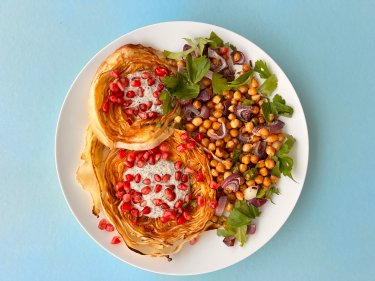
Crispy white cabbage steaks with chickpeas and hemp sauce
2 Portions:
- 1 medium sized white cabbage
- 1 tbsp mustard
- 1 tbsp soy sauce
- 1 tbsp liquid honey
- 1 jar chickpeas (330 g)
- 1 red onion
- 1 tbsp olive oil
- 1 tsp fennel seeds
- black pepper
- 50 g hulled hemp seeds
- 1 tbsp yeast flakes
- 50 g water
- 1 clove garlic
- juice 1/2 lemon
- 1/4 tsp salt (e.g. rock salt)
- coriander and pomegranate seeds to garnish
Preparation:
- Preheat the oven to 170 °C. Cut the cabbage into 6-8 slices and place on a baking tray lined with baking paper. Mix the mustard, soya sauce and honey and spread on the cabbage slices.
- Drain and wash the chickpeas and spread them on the tray. Cut the onions into rings. Spread half over the chickpeas. Drizzle with oil and season with fennel seeds and pepper. Bake the cabbage and chickpeas for approx. 35 minutes.
- In the meantime, puree the hemp seeds, yeast flakes, water, garlic, lemon juice and salt. Serve the baked white cabbage steaks with the hemp sauce and chickpeas. Garnish with coriander and pomegranate seeds.
Your gut as the key to your balance
In the end, everything is connected: A healthy gut, a functioning oestrobolome and a balanced hormonal equilibrium. You can do a lot yourself to ensure that this system remains harmonious. It starts with small steps - and the realisation that your gut is so much more than just a digestive organ.
Kategorien
Health & nutrition at FIBO 2025
Would you like to find out more about natural, healthy sleep? Female Health is all about women's well-being. Sounds exciting? Then don't miss FIBO 2025 in Cologne! From 10 to 13 April, this will be one of the topics discussed at the Nutrition & Diagnostics Area. Be there live and immerse yourself in the world of women's health! Have a look into the programme here.
Über die Autorin

Petra Orzech is a versatile nutritionist, certified yoga teacher, successful author and podcaster who is an ambassador for Female Health. She uses scientific expertise and practical approaches to promote health and fitness, runs cookery courses, develops recipes and grows her own vegetables. She is particularly keen to provide personal support for women over 40 through lectures and coaching sessions. Come and meet Petra in person at FIBO and get valuable first-hand tips.
Want to know more about the gut and hormones? Then listen to Petra's MENO COOL podcast. Go directly to episode #94 HERE.